
Bitcoin has entered a period of relative stability after weeks of sideways trading, but beneath the surface, significant market dynamics suggest potential volatility ahead. Exchange outflows and surging futures activity indicate traders are positioning for the next major price movement, creating a complex market environment that demands careful analysis.
Exchange Outflows Signal Growing Investor Confidence
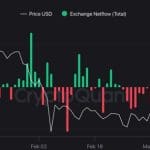
Over the past three weeks, traders have withdrawn substantial amounts of Bitcoin from major exchanges, with approximately 20,600 BTC leaving trading platforms in just three days. This pattern typically indicates renewed market confidence, as investors move their holdings to private wallets for long-term storage rather than keeping them readily available for trading.
Exchange outflows often precede bullish price movements, as reduced supply on trading platforms can create upward pressure when demand increases. The sustained withdrawal pattern suggests institutional and retail investors alike are adopting a more optimistic long-term outlook. Historical data shows that similar outflow patterns have preceded major bull runs, with the 2020-2021 cycle beginning with comparable exchange balance reductions.
Major exchanges including Coinbase, Binance, and Kraken have all reported declining Bitcoin balances, with some platforms experiencing their lowest reserves in over two years. This trend reflects a broader shift toward self-custody solutions and long-term holding strategies among cryptocurrency investors.
Futures Trading Activity Reaches Three-Year Highs
Bitcoin futures trading on Binance has experienced a dramatic surge, with derivatives activity now exceeding spot trading volume by approximately five times. This represents the highest ratio between futures and spot trading in three years, indicating growing appetite for leveraged speculation.
The surge in futures activity reflects trader expectations of increased volatility in the near term. Futures contracts allow market participants to bet on price movements without directly owning Bitcoin, making them attractive during periods of anticipated market shifts. Professional traders and institutional investors are increasingly using these instruments to hedge positions or amplify potential returns.
Open interest across major derivatives platforms has grown by over 40% in the past month, suggesting new capital is entering the leveraged trading space. This influx of speculative activity often precedes significant price movements, as leveraged positions can amplify market reactions to news events or technical breakouts.
Market Sentiment Shows Mixed Signals
Despite the increased futures activity, funding rates have remained negative since March 10, suggesting more traders are betting on price declines than increases. This bearish sentiment among leveraged investors contrasts with the confidence shown by those withdrawing Bitcoin from exchanges.
The Spent Output Profit Ratio (SOPR) indicates that short-term holders continue selling their positions, but not at significant losses. This metric suggests the market maintains underlying resilience despite mixed sentiment indicators. Long-term holders, defined as those holding Bitcoin for more than 155 days, continue to accumulate, with their percentage of total supply reaching new highs.
Fear and Greed Index readings have oscillated between neutral and slightly fearful territory, reflecting the market’s uncertainty about near-term direction. This indecision often characterizes consolidation phases before major trend changes.
Technical Analysis Points to Consolidation Phase
Chart patterns show Bitcoin trading within a relatively narrow range, with technical analysts divided on the next directional move. Some identify formations reminiscent of previous market downturns, while others view the current stability as healthy consolidation before a potential breakout.
The divergence between spot and futures market activity creates an interesting dynamic. While spot trading remains steady with balanced buying and selling pressure, the futures market shows heightened speculation and volatility expectations. Key support and resistance levels have held firm during recent testing, suggesting the consolidation pattern may continue until external catalysts emerge.
Volume profiles indicate significant accumulation zones at current price levels, with institutional buying evident in large block transactions. This suggests sophisticated investors view current prices as attractive entry points for long-term positions.
Market Implications for Traders and Investors
The current market structure presents both opportunities and risks for different types of market participants. Long-term investors appear to be accumulating positions based on exchange outflow data, while short-term traders are increasingly turning to derivatives for potential quick profits.
This environment typically precedes significant price movements in either direction. The combination of reduced exchange balances and heightened futures activity creates conditions where relatively small catalysts could trigger substantial price volatility. Regulatory developments, macroeconomic events, or technical breakouts could serve as the spark for the next major move.
Risk management becomes crucial in such environments, as the potential for rapid price changes increases. Traders should consider position sizing carefully and maintain appropriate stop-loss levels, while long-term investors may benefit from dollar-cost averaging strategies during the consolidation period.
Bitcoin’s current consolidation phase reflects a market at an inflection point. While exchange outflows suggest underlying confidence, the surge in futures trading indicates expectations of increased volatility. Investors should prepare for potential significant price movements as these competing forces resolve in the coming weeks, with market participants positioning for what could be the next major trend in cryptocurrency markets.