
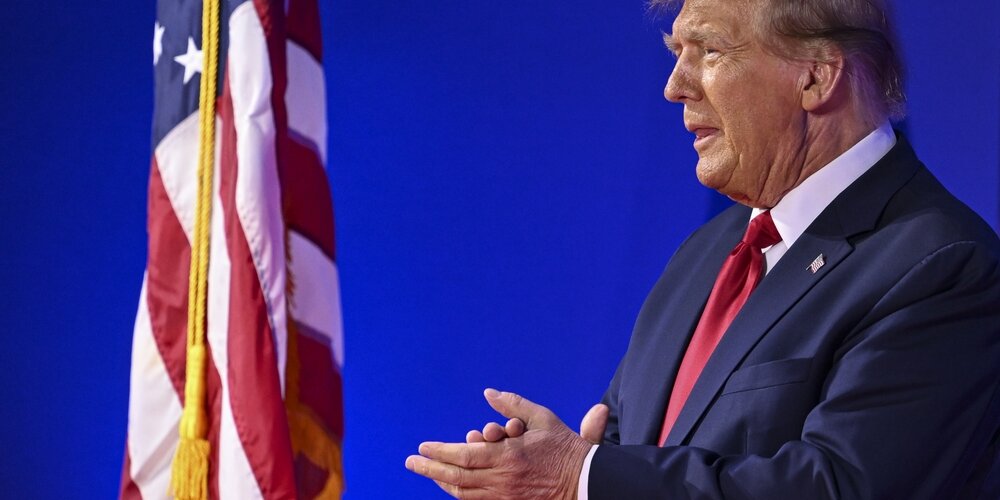
American Bitcoin (ABTC), a mining company connected to Donald Trump’s sons, has surged to become the 16th largest publicly traded bitcoin holder. The company now controls 6,899 BTC worth approximately $491 million, narrowly surpassing Galaxy Digital’s holdings by just five bitcoins.
Trump Family Enters Major Bitcoin Holdings
American Bitcoin launched in March 2024 as a subsidiary of mining giant Hut 8, which retains 80% ownership. The remaining 20% belongs to investors including Eric Trump and Donald Trump Jr., with Eric Trump serving as co-founder and Chief Strategy Officer. This structure positions the Trump family directly within the corporate bitcoin ecosystem, marking a significant shift from traditional political investment patterns.
The Trump family’s involvement in cryptocurrency represents a notable departure from their previous business ventures, which primarily focused on real estate, hospitality, and media. Their entry into the bitcoin mining sector signals growing confidence in digital assets among high-profile political figures and suggests potential policy implications for cryptocurrency regulation under future Trump-aligned administrations.
The company focuses exclusively on large-scale bitcoin mining and storage, deliberately avoiding AI projects that many competitors pursue with their hardware resources. This strategic focus has enabled rapid growth in their bitcoin accumulation strategy, allowing ABTC to concentrate resources on maximizing bitcoin production rather than diversifying into alternative revenue streams.
Rapid Mining Expansion Drives Growth
ABTC recently acquired nearly 11,300 new mining units, boosting its processing capacity by approximately 12%. This aggressive expansion strategy demonstrates the company’s commitment to scaling operations quickly in a competitive mining landscape. The investment represents a substantial capital commitment that positions ABTC for continued bitcoin accumulation through mining rewards.
The mining hardware acquisition includes state-of-the-art ASIC miners designed for optimal energy efficiency and hash rate performance. These units are strategically deployed across multiple facilities to ensure operational redundancy and minimize downtime risks. The company’s infrastructure investments also include advanced cooling systems and renewable energy partnerships to reduce operational costs and environmental impact.
The company’s mining-first approach contrasts sharply with other major bitcoin holders who acquired their positions through direct purchases rather than mining operations. This strategy provides ABTC with a consistent accumulation mechanism that continues regardless of bitcoin’s market price, creating a natural dollar-cost averaging effect through mining rewards.
Political Connections Shape Crypto Landscape
The intersection of politics and cryptocurrency continues deepening as institutional adoption accelerates. Trump Media & Technology Group separately holds over 9,500 bitcoin, while ABTC’s rise demonstrates how political figures are establishing significant positions in digital assets. This trend reflects broader institutional acceptance of bitcoin as a legitimate treasury asset.
The Trump family’s cryptocurrency involvement extends beyond ABTC, with various Trump-branded ventures exploring blockchain applications and digital asset integration. This comprehensive approach to cryptocurrency adoption suggests a long-term strategic vision that could influence Republican Party policy positions on digital assets and blockchain technology regulation.
Other major corporate holders include:
- MicroStrategy: approximately 761,000 BTC
- Marathon Digital: substantial mining reserves
- Tesla: publicly disclosed holdings
- Coinbase: exchange reserves
- Block Inc: significant treasury allocation
- Riot Platforms: mining-focused accumulation
Market Position Despite Broader Uncertainty
ABTC’s ascension occurs amid weakening investor confidence in the broader cryptocurrency market. While overall sentiment shifts toward caution, established bitcoin holders continue demonstrating resilience. The narrow margin between ABTC and Galaxy Digital—just five bitcoins—illustrates how competitive the corporate bitcoin leaderboard has become.
Market analysts note that ABTC’s timing coincides with a period of regulatory uncertainty, making their rapid accumulation particularly noteworthy. The company’s ability to maintain growth during market volatility demonstrates the effectiveness of mining-based accumulation strategies compared to direct market purchases, which are more susceptible to timing and price fluctuations.
This positioning suggests that well-capitalized mining operations can maintain growth trajectories even during market uncertainty, particularly when backed by strategic investors with long-term commitments. The company’s consistent mining rewards provide a buffer against market volatility while building long-term bitcoin reserves.
Strategic Implications for Corporate Bitcoin
ABTC’s rapid climb reflects a broader trend of politically connected entities establishing significant cryptocurrency positions. For investors, this signals increasing mainstream acceptance and potential regulatory clarity as political figures stake their reputations on digital asset success. The company’s mining-focused strategy also provides a hedge against bitcoin price volatility through consistent accumulation regardless of market conditions.
The development reinforces bitcoin’s evolution from speculative asset to strategic treasury holding, particularly as high-profile political figures demonstrate confidence through substantial investments. This institutional validation could accelerate broader corporate adoption of bitcoin treasury strategies, especially among companies seeking to hedge against inflation and currency debasement.
Industry experts suggest that ABTC’s success could inspire other politically connected entities to explore similar cryptocurrency ventures, potentially creating a new category of politically-aligned digital asset companies. This trend may influence future regulatory frameworks and policy discussions surrounding cryptocurrency adoption in corporate America.