
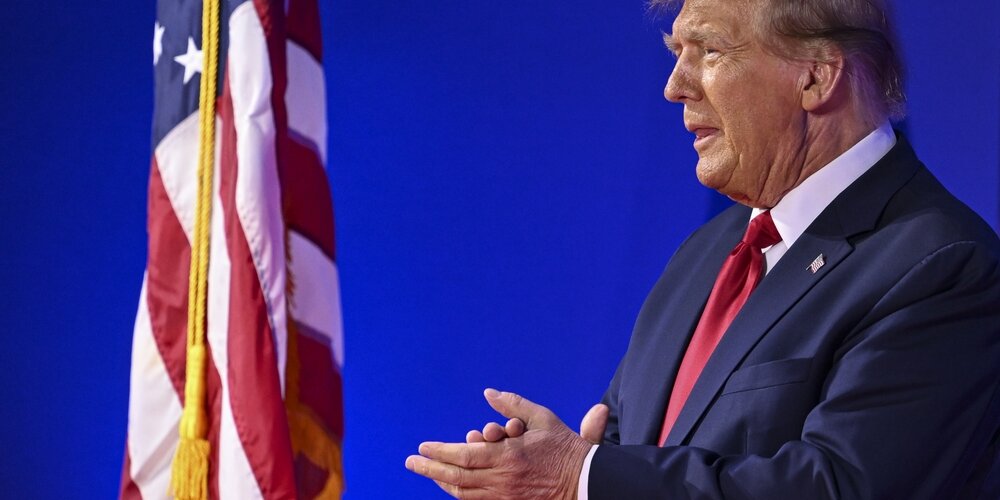
Bitcoin and major cryptocurrencies plummeted nearly 3% overnight as former President Trump’s ultimatum to Iran sent shockwaves through global markets. The sharp decline erased hundreds of millions in trading positions, highlighting crypto’s continued sensitivity to geopolitical tensions and reinforcing concerns about digital asset volatility during international crises.
Trump’s Iran Ultimatum Sparks Market Volatility
Financial markets reacted swiftly after Trump issued a 48-hour ultimatum demanding Iran reopen the Strait of Hormuz to international shipping. The former president warned of targeted strikes on Iranian energy facilities if Tehran failed to comply, creating immediate uncertainty in global energy markets and raising fears of broader regional conflict.
The threat came unexpectedly, particularly after Trump had previously discussed reducing American military presence in the region during his campaign rhetoric. This apparent policy reversal caught traders off guard and triggered a flight to traditional safe-haven assets like gold and U.S. Treasury bonds, while simultaneously pressuring risk-on assets including cryptocurrencies.
The timing of the ultimatum also coincided with heightened tensions across the Middle East, where ongoing conflicts have already disrupted shipping routes and energy supplies. Market analysts noted that any escalation involving Iran could significantly impact global oil prices and economic stability, given the country’s strategic position in the Persian Gulf.
Major Cryptocurrencies Experience Sharp Declines
Bitcoin led the cryptocurrency selloff, dropping 2.8% to $68,250 within minutes of the ultimatum announcement. The world’s largest cryptocurrency by market capitalization saw its value decline from approximately $70,100 to the current level. While prices recovered slightly overnight, Bitcoin remains below $69,000 as uncertainty persists and traders remain cautious about potential further escalation.
Other major cryptocurrencies followed suit with similar losses across the board:
- Ethereum fell approximately 3%, dropping below key support levels
- XRP, Cardano, and Solana each declined between 2.5% and 3%
- Dogecoin suffered the steepest drop at 3.2%, reflecting its higher volatility
- Binance Coin and Polygon also experienced significant selling pressure
The synchronized decline across different cryptocurrency categories demonstrates how geopolitical events can trigger broad-based selling pressure in digital asset markets, regardless of individual project fundamentals or technological developments.
Massive Liquidations Hit Overleveraged Traders
The market turmoil resulted in approximately $320 million in forced liquidations across major trading platforms including Binance, Bybit, and OKX, affecting nearly 98,000 traders worldwide. Long positions accounted for roughly $260 million of these liquidations, indicating widespread bullish sentiment before the sudden market crash.
Many traders had positioned themselves for continued price appreciation, expecting positive developments such as peace talks, ceasefire agreements, or favorable regulatory news from major economies. This optimistic positioning, combined with high leverage ratios, left the market particularly vulnerable to sudden negative news, amplifying the impact of Trump’s announcement and creating a cascade effect of forced selling.
The liquidation data reveals that retail traders were disproportionately affected, with smaller position sizes being closed out first as margin requirements increased rapidly during the volatility spike.
Crypto Market’s Geopolitical Sensitivity Exposed
The swift market reaction underscores cryptocurrency’s ongoing correlation with traditional risk assets during periods of geopolitical stress. Despite Bitcoin’s original positioning as a hedge against traditional financial systems and a store of value independent of government control, major cryptocurrencies continue to behave like risk-on assets when global tensions escalate.
This correlation has become increasingly pronounced as institutional investors have entered the cryptocurrency space, bringing with them traditional risk management practices that treat digital assets similarly to tech stocks or other growth investments. The result is that crypto markets now often move in tandem with broader equity markets during times of uncertainty.
Interestingly, not all digital assets declined during the selloff. The cryptocurrency River surged nearly 23%, demonstrating that even during market-wide selloffs, individual projects can still attract investor interest based on specific fundamentals, technological developments, or positive news unrelated to geopolitical events.
Market Outlook Amid Political Uncertainty
The cryptocurrency market’s reaction to Trump’s ultimatum reflects broader investor concerns about escalating Middle East tensions and their potential impact on global energy supplies and economic stability. The Strait of Hormuz handles approximately 20% of global oil transit, making any disruption economically significant and potentially triggering widespread inflation concerns.
For cryptocurrency investors, this episode serves as a stark reminder that digital assets remain susceptible to traditional geopolitical risks despite their decentralized nature. While blockchain technology operates independently of government control, cryptocurrency prices still reflect investor sentiment and risk appetite in the broader financial ecosystem.
As the 48-hour deadline approaches, traders will likely remain cautious, with volatility expected to persist until the situation resolves or de-escalates. The market’s ability to recover will depend largely on whether tensions subside or continue to intensify in the coming days, as well as any potential diplomatic interventions from international allies.